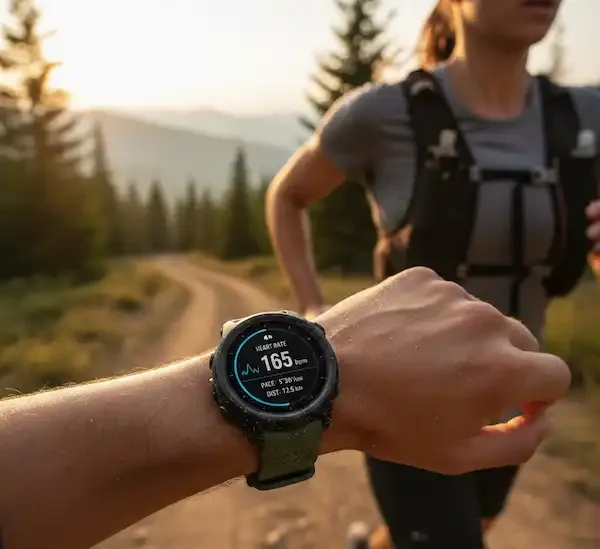
Testing the Limits: My Decade with Athletic Wearables
Testing wearables isn’t just about looking at a spec sheet in a pristine office; it’s about how a silicone strap feels when it’s caked in salt and dried sweat at mile 18 of a marathon. I’ve spent the last decade swapping watches like some people swap socks, trying to find that perfect balance between “smart” features and “sport” reliability. Whether you are tethered to an iPhone or rocking an Android flagship, the market for top performance sports watches has never been more competitive—or more confusing.
The truth is, most “best of” lists just regurgitate the manufacturer’s marketing deck. But if you’ve ever had a watch die on you halfway through a trail race because the GPS was set to the wrong frequency, you know that marketing doesn’t matter. What matters is recovery data, heart rate accuracy during intervals, and whether the screen is actually readable in the blinding midday sun.
The Ecosystem Reality Check
Before we talk about sensors and glass, we have to talk about the “walled garden.” If you’re an iPhone user, you probably already know that the Apple Watch is the most seamless experience you can get. But as an athlete, is it the best? Not necessarily. I’ve found that while the integration is slick, the data depth often lags behind specialized brands.
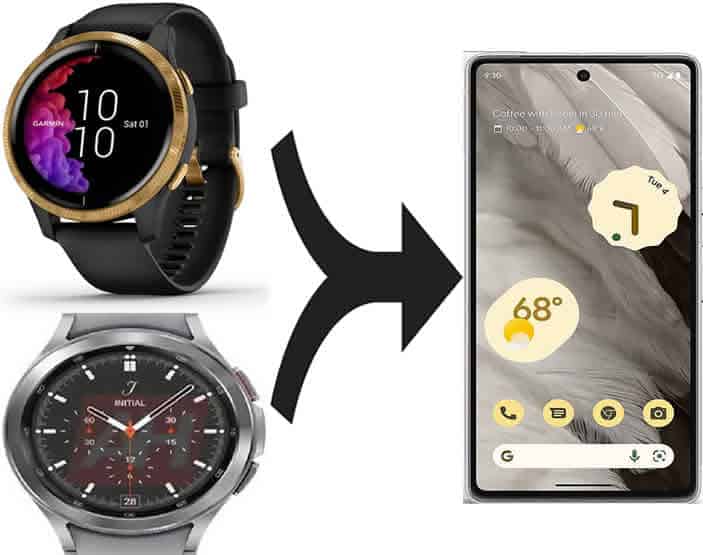
For Android users, the landscape is even more fractured. You have Wear OS watches like the Pixel or Samsung, but many of the top performance sports watches that serious athletes use—like those from Garmin, Coros, or Suunto—live in their own cross-platform apps. These brands don’t care if you have a Galaxy or an iPhone; they just care about your VO2 Max.
The “All-Rounder” for the Hybrid Athlete
When I first strapped on the Garmin Fenix series years ago, I felt like I was wearing a small computer on my wrist. It was bulky and intimidating. Fast forward to today, and the Garmin Epix or Fenix 7 Pro represents the gold standard for what I call the “hybrid athlete”—someone who hits the squat rack on Monday and a 10-mile trail run on Tuesday.
The reason Garmin remains a leader in top performance sports watches isn’t just the GPS; it’s the “Body Battery” and “Training Readiness” metrics. I remember a specific Tuesday when I felt fine, but my watch told me my recovery was poor and my HRV (Heart Rate Variability) was trending low. I ignored it and went for a heavy deadlift session. I ended up pulling a muscle and being sidelined for two weeks. Since then, I’ve learned to respect the recovery algorithms. These metrics are built on Firstbeat Analytics, a company Garmin acquired because their physiological modeling is miles ahead of the competition.
For the Android crowd, the Samsung Galaxy Watch Ultra is trying to move into this space, but it still feels a bit more “smart” than “sport.” If you want deep data, Garmin’s Connect app is where the insiders stay.
The Apple Watch Ultra 2: Is it Actually for Athletes?
There was a lot of skepticism when Apple launched the Ultra. “It’s for hikers who take photos of trees,” people said. But after using it for several half-marathons, I’ve had to eat my words. The dual-frequency GPS in the Ultra 2 is shockingly accurate. I’ve run through downtown Chicago—the ultimate test for GPS due to the “urban canyons” created by skyscrapers—and it held the line better than almost anything else.
However, the battery life remains the elephant in the room. If you are an Ironman triathlete, you are pushing the limits of the Ultra. I’ve talked to many endurance coaches who still won’t recommend it for 100-mile ultras because “battery anxiety” is a real thing when you’re 20 hours into a race. But for the 95% of us who work out for 60 to 90 minutes a day and want to be able to reply to a text via voice while running, it’s arguably the best experience for iPhone users. It’s one of the top performance sports watches that actually feels like a piece of high-end jewelry when you aren’t sweating.
The Endurance Specialist: Coros and Suunto
If you’ve spent any time in the ultrarunning community, you’ve seen the Coros Apex or Vertix. These guys came out of nowhere and disrupted the market by focusing on one thing: battery life. I remember doing a 50k and seeing my friend’s Coros still at 90% battery at the finish line. It’s mind-blowing.
Suunto, the Finnish veteran, has also made a massive comeback with the Race and Vertical models. They’ve moved to beautiful AMOLED screens while maintaining battery life that puts Apple to shame. The insider knowledge here is about the maps. Suunto’s offline topographical maps are some of the most intuitive I’ve used. When you’re at a fork in a trail and your phone has no service, having a clear, offline map on your wrist is a safety feature, not just a luxury.
In terms of being top performance sports watches, Coros and Suunto offer a “no-nonsense” approach. They don’t have music streaming or fancy app stores, but they will never let you down in the middle of a mountain range.
Understanding the Sensors: Beyond the Marketing
We need to talk about optical heart rate sensors. Every brand claims theirs is the best. In my experience, no wrist-based sensor is perfect for high-intensity interval training (HIIT). There is a physiological lag—your heart rate spikes, but the blood flow at your wrist takes a few seconds to catch up.
If you are serious about using top performance sports watches for zone-based training, you should pair them with a chest strap like the Polar H10. Most people don’t realize that even the most expensive watch is still limited by the physics of skin-contact sensors. Insiders always use a strap for the “hard” days and the watch for the “easy” days and daily tracking.
The Power of Recovery Data
In the early days, we just tracked miles and pace. Now, we track sleep cycles, blood oxygen, and skin temperature. This is where top performance sports watches provide the most value for the average person.
I’ve used the Whoop strap alongside watches for years, and what I’ve noticed is that the brands that integrate sleep data into your workout “readiness” are the ones that actually improve your fitness. If you had a couple of drinks on a Saturday night, your watch will show a spike in resting heart rate and a dip in HRV. Seeing that data on your wrist is a powerful deterrent. It changes your behavior. That’s the real “smart” part of a smartwatch.
Use Cases: Which Athlete Are You?
1. The “Data Nerd” Triathlete You need something that handles transitions effortlessly. You need a watch that talks to your bike power meter via ANT+ and your treadmill via Bluetooth. For this, the Garmin Forerunner 965 is king. It’s lightweight (plastic is better than metal for racing weight) and has every metric imaginable. It is widely considered one of the top performance sports watches for multi-sport athletes.
2. The Weightlifter and Crossfitter Wrist-based watches are notoriously bad at tracking lifting because when you flex your wrist, it disrupts the sensor’s contact with the skin. However, the newer algorithms in the Apple Watch and the Garmin Venu series have “muscle map” features that let you log sets and reps. It’s still a bit clunky, but it’s getting better.+1
3. The Trail Runner and Mountaineer You need “Breadcrumb” navigation and a barometer. When a storm is rolling in, the barometric altimeter in top performance sports watches will show a sudden drop in pressure before the clouds even arrive. The Coros Vertix 2S or the Garmin Fenix 7 are the tools for this job.
4. The Corporate Athlete You want to track your morning 5k, but you need to wear the watch to a board meeting. This is where the Apple Watch Ultra or the Garmin Marq series shines. They look like high-end timepieces but have the “guts” of a dedicated sports tracker.
The “Hidden” Costs: Apps and Subscriptions
One thing people often overlook when buying top performance sports watches is the ongoing cost. Fitbit (owned by Google) hides a lot of their best data behind a “Premium” paywall. Apple requires an iPhone. Garmin, Suunto, and Coros currently offer all their data analysis for free once you buy the hardware.
As an industry insider, I always tell people to look at the app ecosystem. Download the Garmin Connect app or the Strava app before you buy the watch. See if you like the interface. You’re going to be looking at it every single day. Strava is the universal language of athletes, and ensuring your watch syncs flawlessly with it is a non-negotiable for most.
The Durability Factor
I once smashed a standard smartwatch screen against a granite rock while scrambling in the White Mountains. Since then, I only buy watches with Sapphire glass. It’s almost impossible to scratch. If you’re an athlete who actually gets outside, don’t cheap out on the glass. The “Standard” versions of many top performance sports watches use Gorilla Glass or chemically strengthened glass, which is fine for the gym but risky on the trails.
Titanium vs. Stainless Steel is another consideration. Titanium is lighter and has a better strength-to-weight ratio, which matters when you’re swinging your arm for four hours during a marathon. It also reacts less with the skin, making it better for those with metal sensitivities.
Battery Life Realities
Manufacturers love to quote battery life in “Smartwatch Mode,” which often means with all the cool features turned off. When you turn on “All Systems” GPS (connecting to multiple satellite constellations for better accuracy), that 14-day battery life often drops to 14 hours.
When choosing between top performance sports watches, look for the “GPS battery life.” If you plan on doing a full Ironman, you need at least 20 hours of solid GPS life to be safe. If you’re a weekend warrior doing 5ks, even a basic Apple Watch SE will get you through the week with nightly charging.
The Future of Athletic Wearables
We are moving away from just “tracking” and toward “coaching.” The next generation of top performance sports watches will likely incorporate AI that doesn’t just tell you that you’re tired, but suggests specific mobility drills or nutrition adjustments based on your sweat rate. Some Garmin models already suggest workouts based on your current training load. It’s like having a coach on your wrist that knows you better than you know yourself.
Why Your Phone Choice Matters
If you are an Android user, you are currently in a bit of a golden age for choice. You can use the Google Pixel Watch 3, which has deep integration with Fitbit’s recovery metrics, or you can go the hardcore route with a Garmin. If you use an iPhone, the Apple Watch is so good that it’s hard to justify anything else unless you are a dedicated endurance athlete.
The integration of Apple Health and Google Fit cannot be understated. These hubs pull data from your smart scale, your nutrition app, and your watch to give a holistic view. I always recommend staying within an ecosystem that makes data sharing easy.
My Personal Recommendation
After years of testing, if someone asks me what the best of the top performance sports watches is today, I usually ask them: “Do you want to talk to your watch, or do you want it to tell you when to run?”
If you want to talk to it, get an Apple Watch Ultra 2 (iPhone) or a Samsung Galaxy Watch Ultra (Android). If you want it to tell you when to run, get a Garmin Forerunner 965 or a Coros Pace 3. The Coros Pace 3 is particularly impressive because it provides 90% of the features of a $600 watch for about $230. It’s the “insider’s secret” for budget-conscious athletes.
Final Thoughts on Choosing Your Gear
Don’t buy more watch than you need, but don’t buy a watch that you’ll outgrow in six months. If you are just starting your fitness journey, a mid-range tracker is fine. But if you have a goal—a first marathon, a century ride, or a Spartan race—investing in one of the top performance sports watches will provide the data and motivation to get you across the finish line.
Athletics is about the grind, the sweat, and the incremental gains. Your watch should be a tool that facilitates that, not a distraction that requires constant tinkering. Find the one that disappears on your wrist until the moment you need to know your split or your heading. That’s the mark of truly great gear.
FAQ: Everything You Need to Know About Sports Watches
Q: Can I use a Garmin watch with an iPhone? A: Yes, absolutely. Garmin watches work perfectly with both iPhone and Android through the Garmin Connect app. The only thing you can’t do on iPhone (due to Apple’s restrictions) is reply to text messages directly from the watch.
Q: Is the heart rate sensor on a watch as good as a chest strap? A: For steady-state cardio like walking or easy running, yes. For sprints, heavy lifting, or any activity where your heart rate changes rapidly, a chest strap is still significantly more accurate.
Q: Do I need to pay a monthly subscription for these watches? A: It depends on the brand. Garmin, Coros, and Suunto have no required monthly fees. Fitbit (Google) and Whoop require subscriptions to see your long-term data trends and “readiness” scores. Apple Watch doesn’t have a fee for the data, but Apple Fitness+ is a paid service for guided workouts.
Q: What is dual-band GPS and do I need it? A: Dual-band (or L1+L5) GPS allows the watch to receive two different signals from satellites. This helps filter out errors caused by signal bouncing off buildings or mountains. If you live in a big city or run in deep woods, it’s a game-changer for accuracy.
Q: How long do these watches typically last? A: You can expect 3 to 5 years of solid use. The hardware is usually very durable, but the lithium-ion battery will naturally degrade over time, and the software may eventually become sluggish compared to newer models.
Q: Can I play music from my watch without my phone? A: Many top performance sports watches now offer “Music” versions or built-in storage. You can sync playlists from Spotify, Deezer, or Amazon Music directly to the watch and pair it with Bluetooth headphones.
Q: Is it worth upgrading every year? A: Rarely. The jump from one generation to the next is usually incremental. I usually recommend upgrading every 3 generations to see a significant difference in sensor technology and battery life.
Q: Does sweat damage the watch? A: These watches are designed for it! However, salt can build up over time. It is a good practice to rinse your watch with fresh water after a particularly sweaty workout or a swim in the ocean to keep the charging pins and sensors clean.
Q: What is HRV and why does my watch track it? A: HRV stands for Heart Rate Variability. It measures the variation in time between each heartbeat. A higher variability usually means your nervous system is recovered and ready for stress, while low variability can be a sign of overtraining or illness. It’s one of the most important metrics for modern athletes.
Q: Can I use these watches for swimming? A: Yes, most top performance sports watches are rated for at least 5 ATM (50 meters) of water resistance. They have specific modes for pool swimming (counting lengths) and open water swimming (using GPS to track your path).
Additional Helpful Information
- Read about the best smartwatches for marathon runners – The Best Marathon Running Smartwatches for 2026