Apple Watch Ultra vs Garmin: The Ultimate Smartwatch Showdown
Choosing the right smartwatch can be a daunting task, especially when you’re looking for a device that excels in both everyday smart features and robust fitness tracking. Two giants stand out in this arena: the Apple Watch Ultra and various high-end Garmin models. Both cater to active individuals, adventurers, and tech enthusiasts, but they approach their design and functionality from different philosophies. This comprehensive guide will help you navigate their strengths and weaknesses, offering examples, comparisons, and expert insights to inform your decision.
Introduction: A Battle of Titans – Apple Watch Ultra vs Garmin
For years, Garmin has been the undisputed champion in the realm of dedicated sports watches, known for their rugged durability, exceptional battery life, and unparalleled GPS accuracy. The Apple Watch, while dominant in the mainstream smartwatch market, traditionally focused on daily smart features and a more urban aesthetic. However, with the introduction of the Apple Watch Ultra, Apple made a clear statement: they’re coming for the adventurers.
The Apple Watch Ultra is Apple’s most robust and feature-rich smartwatch to date, designed to compete directly with Garmin’s top-tier offerings like the Fenix, Epix, and Forerunner series. It boasts a larger, brighter screen, a customizable Action Button, enhanced GPS, and a significantly longer battery life than previous Apple Watch models. But is it enough to dethrone the king of endurance wearables? Let’s dive in.
Design and Durability: Built for Adventure
Both Apple Watch Ultra vs Garmin devices are built to withstand the rigors of an active lifestyle. However, their design philosophies differ.
Apple Watch Ultra:
- Materials: Aerospace-grade titanium casing, sapphire front crystal.
- Water Resistance: 100m, suitable for recreational scuba diving (to 40m) and high-speed water sports. EN13319 certified.
- Operating Temperature: Designed for extreme conditions, from -20°C to 55°C (-4°F to 131°F).
- Look and Feel: Distinctive flat display, exposed screws, and a prominent orange Action Button. It feels substantial and premium.
- Bands: Comes with specialized bands for different activities (Alpine Loop, Trail Loop, Ocean Band).
Garmin (e.g., Fenix 7 Pro, Epix Pro):
- Materials: Often features stainless steel or titanium bezels, fiber-reinforced polymer cases, and Corning Gorilla Glass or sapphire lenses.
- Water Resistance: Typically 10 ATM (100 meters), suitable for swimming, snorkeling, and diving (not SCUBA rated).
- Operating Temperature: Generally -20°C to 45°C (-4°F to 113°F).
- Look and Feel: Traditional round watch face, often more rugged and tool-like in appearance. Button-heavy interface with optional touchscreen.
- Bands: Wide variety of quick-release bands available, including silicone, leather, nylon, and titanium.
Example:
Imagine a rock climber scaling a granite face. The Apple Watch Ultra’s titanium case and sapphire crystal offer excellent scratch and impact resistance. The Fenix 7 Pro, with its robust build and button-only interface option, might appeal more to those who prefer tactile controls over a touchscreen in challenging conditions.
Display: Clarity in Every Condition
Apple Watch Ultra vs Garmin – The display is a crucial interface for any smartwatch.
Apple Watch Ultra:
- Type: Always-On Retina LTPO OLED display.
- Brightness: Up to 2000 nits, making it incredibly visible even in direct sunlight. This is one of its standout features.
- Size: 49mm case, offering a large and easily readable screen.
Garmin (e.g., Epix Pro, Fenix 7 Pro):
- Epix Pro: Always-On AMOLED display, vibrant colors, excellent brightness (though typically not reaching 2000 nits).
- Fenix 7 Pro: Transflective Memory-in-Pixel (MIP) display. This technology uses ambient light to illuminate the screen, making it incredibly power-efficient and highly visible in bright sunlight without backlight. It’s not as vibrant indoors but excels outdoors. It often includes solar charging capabilities.
Example:
Hiking on a sunny mountain trail, the Apple Watch Ultra’s 2000-nit screen would deliver crystal-clear maps and metrics. Meanwhile, a Garmin Fenix 7 Pro’s MIP display would also be perfectly readable, potentially even more so in direct sun, and wouldn’t be draining battery as rapidly. For indoor workouts or reviewing detailed maps in low light, the Epix Pro’s AMOLED would shine.
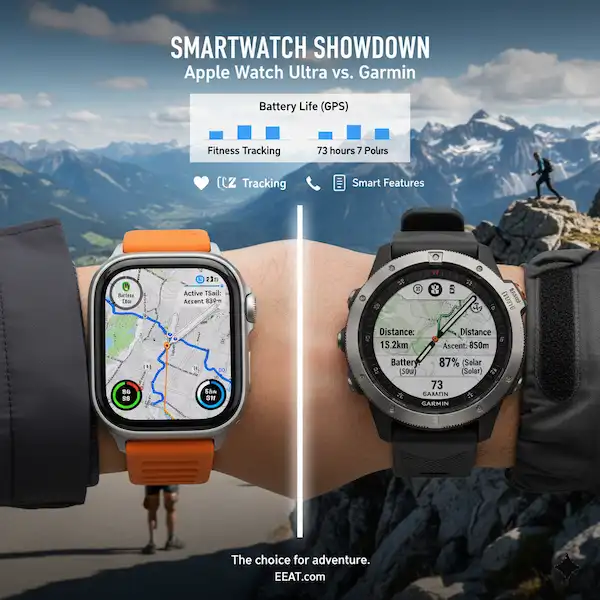
Battery Life: Endurance for the Long Haul – Apple Watch Ultra vs Garmin
This is arguably the most significant differentiator, especially for multi-day adventures or athletes who want to avoid daily charging.
Apple Watch Ultra:
- Typical Use: Up to 36 hours.
- Low Power Mode: Up to 72 hours.
- GPS Tracking: Around 12-15 hours with precise GPS.
- Charge Time: Approximately 1.5 hours for 0-80%, 2.5 hours for 0-100%.
Garmin (e.g., Fenix 7 Pro Solar, Epix Pro Gen 2):
- Fenix 7 Pro Solar:
- Smartwatch mode: Up to 18 days / 22 days with solar*
- GPS only: Up to 57 hours / 73 hours with solar*
- Expedition GPS: Up to 40 days / 74 days with solar*
- Epix Pro Gen 2 (47mm):
- Smartwatch mode: Up to 16 days (6 days always-on)
- GPS only: Up to 30 hours (24 hours always-on)
- Charge Time: Generally around 1-2 hours for a full charge.
- Assumes 3 hours per day outside in 50,000 lux conditions.
Example:
Planning a multi-day backpacking trip in the wilderness where charging access is non-existent. A Garmin Fenix 7 Pro Solar could last the entire trip, providing continuous GPS tracking and health data. The Apple Watch Ultra, even in low power mode, would require careful management and likely an external power bank for extended excursions.
Chart: Battery Life Comparison – Apple Watch Ultra vs Garmin
| Feature | Apple Watch Ultra (Typical/Low Power) | Garmin Fenix 7 Pro Solar (Smartwatch/GPS) | Garmin Epix Pro Gen 2 (Smartwatch/GPS) |
| Smartwatch Mode | 36 hrs / 72 hrs | 18-22 days | 16 days (6 days AOD) |
| GPS Tracking (Precise) | ~12-15 hrs | 57-73 hrs | 30 hrs (24 hrs AOD) |
| Expedition GPS | N/A | 40-74 days | N/A |
Fitness and Health Tracking: Precision at Your Wrist – Apple Watch Ultra vs Garmin
Both devices offer comprehensive tracking but with different focuses and ecosystems.
Apple Watch Ultra:
- Sensors: Heart rate, ECG, Blood Oxygen, Skin Temperature (for cycle tracking), Dual-frequency GPS (L1+L5), Compass, Altimeter, Depth Gauge (for diving).
- Key Features: Advanced running metrics (stride length, ground contact time, vertical oscillation), custom workouts, multisport workouts (triathlon), dive computer functionality, Crash Detection, Fall Detection, Backtrack (for navigation).
- Ecosystem: Deep integration with Apple Health, Fitness+, and a vast array of third-party health apps. It leverages the iPhone for setup, data syncing, and advanced analysis.
Garmin (e.g., Fenix 7 Pro, Epix Pro, Forerunner 965):
- Sensors: Elevate Gen 5 heart rate (with improved accuracy), Pulse Ox, multi-band GPS (L1+L5), Barometric Altimeter, Compass, Thermometer.
- Key Features: Unparalleled array of sports profiles (hundreds), advanced physiological metrics (Training Status, Training Readiness, VO2 Max, Recovery Time, Heat and Altitude Acclimation, HRV Status, Body Battery, Sleep Score, Stamina), mapping (TOPO maps preloaded), PacePro, ClimbPro, Up Ahead, Incident Detection.
- Ecosystem: Garmin Connect platform is incredibly rich in data analysis, training plans, and community features. It’s designed for serious athletes and data junkies. Many Garmin watches can function very independently of a smartphone for activity tracking.
Example: A Triathlete’s Perspective
- Apple Watch Ultra: Excellent for tracking swimming, cycling, and running with precise GPS. Its multisport mode allows seamless transitions. The large screen is great for viewing data during a race. Integration with Strava and other apps is smooth.
- Garmin Forerunner 965: Purpose-built for triathletes. Offers an even deeper dive into running dynamics, cycling power metrics (with external sensors), and swim stroke analysis. The training load and recovery metrics are unmatched, guiding the athlete’s entire training cycle. The extended battery life is crucial for Ironman distances.
Smart Features and Ecosystem: More Than Just a Watch – Apple Watch Ultra vs Garmin
Here’s where Apple typically has an edge in mainstream usability, but Garmin is catching up.
Apple Watch Ultra:
- Connectivity: Cellular built-in (requires separate plan), Wi-Fi, Bluetooth.
- Smart Features: Full iPhone integration (notifications, calls, messages, Siri, Apple Pay, App Store), Apple Music, podcasts, Wallet.
- User Experience: Intuitive, fluid watchOS interface. Access to a vast app ecosystem.
Garmin (e.g., Fenix 7 Pro, Epix Pro):
- Connectivity: Bluetooth, ANT+, Wi-Fi. (Some models have LTE for safety features, not full cellular calls).
- Smart Features: Notifications, Garmin Pay (contactless payments), music storage (Spotify, Amazon Music), calendar sync, weather. Limited app store (Connect IQ) compared to Apple.
- User Experience: Button-centric interface for most models, with touchscreens on newer Pro versions. Designed to minimize screen interaction during activities.
Example:
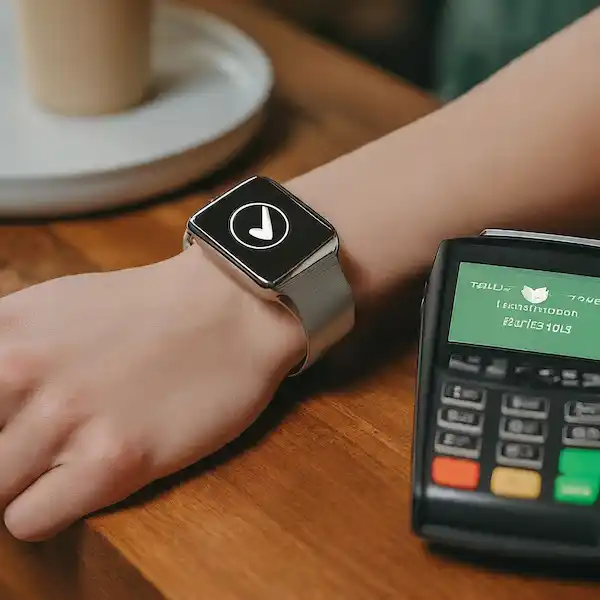
During a commute, receiving and responding to messages, paying for coffee with Apple Pay, and controlling smart home devices are seamless on the Apple Watch Ultra. A Garmin user would primarily use it for notifications and Garmin Pay, relying on their phone for more interactive smart tasks.
Pricing and Value: What’s Your Investment? – Apple Watch Ultra vs Garmin
Both brands represent a significant investment.
Apple Watch Ultra:
- Starting Price: Typically around $799 USD.
- Included: Cellular connectivity, specialized band.
- Value: Offers a premium smartwatch experience with robust fitness tracking and deep ecosystem integration. It’s a single, high-end model.
Garmin (High-End Models):
- Starting Price: Can range from $599 (Forerunner 965) to $899+ (Fenix 7 Pro Sapphire Solar, Epix Pro Gen 2).
- Included: Varies by model (e.g., solar charging, sapphire glass, preloaded maps).
- Value: Offers specialized, data-rich tracking for athletes and adventurers, with exceptional battery life and a proven track record in outdoor navigation. There are many models at different price points catering to specific needs.
Who Should Choose Which?
Choose the Apple Watch Ultra if:
- You are an iPhone user seeking the absolute best integration with the Apple ecosystem.
- You prioritize cutting-edge smart features, app access, and seamless communication from your wrist.
- You need a highly visible, vibrant display, even in bright sunlight.
- You participate in varied sports and adventures (running, cycling, swimming, hiking, diving) but don’t require multi-week battery life for GPS tracking.
- You appreciate a premium design and materials for both daily wear and active use.
- You are willing to charge your watch every 1-3 days.
- You want advanced safety features like Crash Detection and Fall Detection.
Choose a High-End Garmin (Fenix, Epix, Forerunner) if:
- You are a dedicated athlete, adventurer, or outdoor enthusiast who prioritizes detailed physiological data, training metrics, and navigation tools.
- You require multi-day or multi-week battery life, especially for long expeditions or ultra-endurance events.
- You value a highly robust, “tool-like” watch that can withstand extreme environments.
- You need precise, multi-band GPS and comprehensive mapping capabilities independent of a phone.
- You prefer a button-centric interface for reliable control during activities, even in wet or cold conditions.
- You’re deeply invested in the Garmin Connect ecosystem for training analysis and planning.
- You may not be an iPhone user or do not prioritize extensive smartwatch features beyond notifications and payments.
Frequently Asked Questions (FAQ) – Apple Watch Ultra vs Garmin
Q: Can I use an Apple Watch Ultra with an Android phone?
A: No, the Apple Watch Ultra, like all Apple Watches, requires an iPhone to set up and function.
Q: Can Garmin watches receive calls and texts?
A: Garmin watches can receive notifications for calls and texts from both iOS and Android phones. Some models with LTE allow for safety features (like assistance requests) without a phone, but typically not full voice calls.
Q: Which watch is better for serious marathon runners?
A: While the Apple Watch Ultra is excellent, a Garmin Forerunner series watch (e.g., Forerunner 965 or 265) often provides more in-depth running dynamics, training load metrics, and much longer battery life essential for serious marathon training and race day.
Q: Is the Apple Watch Ultra truly as durable as a Garmin Fenix?
A: The Apple Watch Ultra is very durable, with titanium and sapphire glass. Garmin Fenix watches are legendary for their ruggedness, often featuring military-grade standards. Both are built tough, but Garmin often has a slight edge in pure physical resilience and long-term abuse tolerance in extreme environments due to its materials and design philosophy.
Q: Do Garmin watches have ECG or blood oxygen tracking?
A: Many high-end Garmin watches include Pulse Ox (blood oxygen saturation) tracking. As of my last update, Garmin does not offer ECG functionality in its consumer watches.
Q: Which has better mapping features?
A: Garmin excels in mapping. Many high-end Garmin models come with preloaded topographic maps, turn-by-turn navigation, and robust routing features that can be used completely offline. The Apple Watch Ultra offers excellent mapping via Apple Maps and third-party apps, but often requires more reliance on cellular or pre-downloaded data.
Additional Helpful Links
- Here are the best smartwatches for Android – Best Smartwatches for Android: Top Picks & Comparison
- Best watch for marathons – My Guide to the top marathon running watches for 2026
- Read about the best smartwatches for iPhone – Finding the Best Smartwatch for iPhone
External Resources
For further in-depth research and authoritative information, consider visiting these official and reputable sources:
- Apple Watch Ultra Official Page: https://www.apple.com/apple-watch-ultra-2/
- Garmin Official Website: https://www.garmin.com/en-US/
- DC Rainmaker (Independent Wearable Reviews): https://www.dcrainmaker.com/ (Highly respected for detailed sports tech reviews)
- The Verge (Tech News & Reviews): https://www.theverge.com/
- TechRadar (Tech Reviews & Buying Guides): https://www.techradar.com/